

How to Properly Store a Bottle of Nebbiolo?
Nebbiolo is one of Italy’s most prestigious grape varieties, celebrated for its complex structure and remarkable aging potential. Proper storage is essential to ensure that each bottle can express its best qualities over time. Its wide aromatic range, firm tannic structure, and high acidity make Nebbiolo a wine that improves with age—but only if handled with care and attention.
Storing Nebbiolo correctly means respecting its nature and ensuring a high-level sensory experience that evolves over the years. In this article, we’ll explore the ideal conditions for storing Nebbiolo, how to handle it once opened, and the mistakes to avoid.
Nebbiolo characteristics that affect storage
Nebbiolo’s acidity and tannins
Nebbiolo stands out for its high acidity and pronounced tannins. While these can seem aggressive when the wine is young, they are precisely what contribute to its ability to age for a long time. Proper storage allows these elements to integrate over time, bringing out the wine’s full aromatic complexity.
Evolution over time: how the wine changes
With aging, Nebbiolo develops new nuances: floral notes of rose and violet gain additional layers of leather, forest floor, and spice. Time is a great ally for Nebbiolo—but only if the wine is stored under the right conditions.
Why Nebbiolo requires special attention
Nebbiolo needs consistent care due to its complex structure and long evolution. An environment that is too warm or too humid can damage its integrity, while incorrect storage can cause it to lose its finest nuances.
Ideal conditions for storing Nebbiolo
Temperature: the best range for optimal aging
Storage temperature is crucial to keep Nebbiolo in good condition. The ideal is a constant temperature between 10°C and 15°C. Temperatures that are too high accelerate aging and damage the wine’s structure, while temperatures that are too low slow down maturation. It is essential to avoid temperature fluctuations, which can compromise the wine’s integrity.
Humidity: the importance of the right level
A humidity level between 60% and 70% is ideal for storing Nebbiolo. If humidity is too low, the cork can dry out, allowing air into the bottle and accelerating oxidation. If humidity is too high, it can encourage mold on the bottle and label, affecting both appearance and the wine’s integrity.
Light and ventilation: why they matter
Direct light damages wine by altering aromas and speeding up oxidation. Nebbiolo should be stored in a dark, cool place—ideally in a cellar or a wine fridge with shielded lighting. Ventilation is important to keep the environment dry and prevent unpleasant odors.
Bottle position: horizontal or vertical?
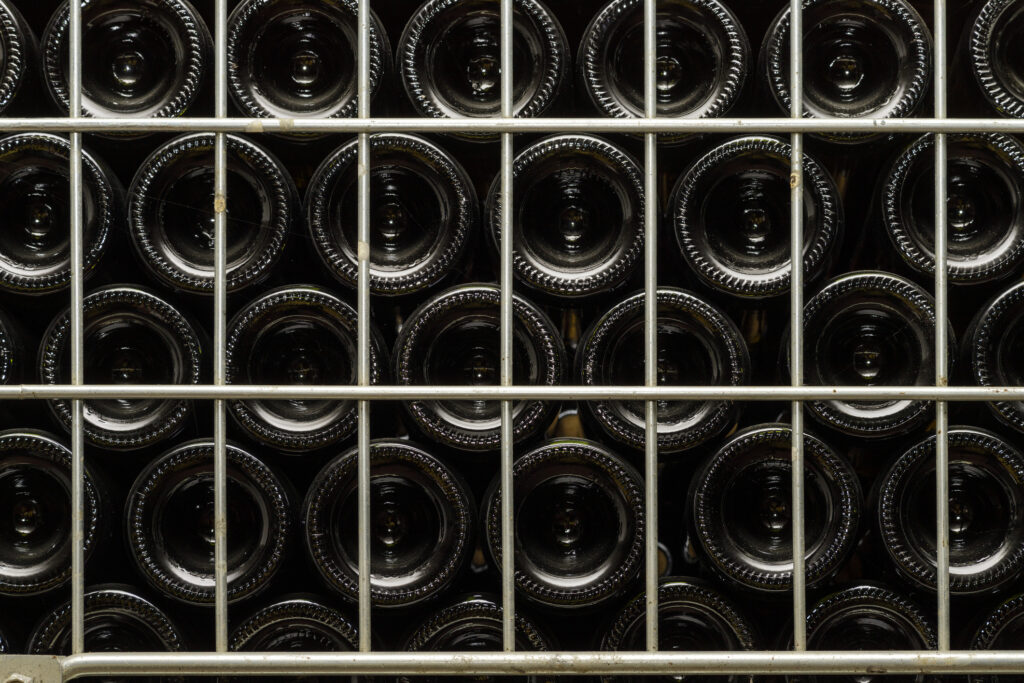
Nebbiolo bottles should be stored horizontally. This keeps the wine in contact with the cork, maintaining its moisture and preventing air from entering the bottle. Vertical storage is not recommended, as it can lead to cork deterioration.
How to store a bottle of Nebbiolo once opened
Methods to extend freshness
Once opened, a bottle of Nebbiolo typically lasts 2 to 3 days, unless handled with extra care. To preserve it, it is recommended to use a vacuum pump, which removes air from the bottle and reduces oxidation. Another effective method is using airtight stoppers that seal the bottle properly.
Helpful tips to avoid oxidation
Oxidation is the main enemy of an open Nebbiolo. To limit it, store the bottle in the refrigerator, even though it is a red wine. Cold temperatures slow oxidation, and the wine can return to its ideal serving temperature in about 30–60 minutes.
How long can Nebbiolo last after opening?
If well preserved, an opened Nebbiolo can remain in good condition for 2–3 days, and with the right precautions even up to 5 days. However, it is always best to drink it sooner to enjoy its freshest characteristics.
Common mistakes in storing Nebbiolo
Avoid excessive temperatures or frequent temperature swings
One of the most common mistakes is exposing Nebbiolo to temperatures that are too high or frequent fluctuations. This damages the wine, causing it to lose freshness and complexity. A stable, cool environment is key.
Unsuitable positions and direct light
Never store Nebbiolo in places exposed to direct light or overly bright environments. Light and heat damage aromatic compounds, reducing the tasting experience.
Storage in environments that are too humid or too dry
Avoid cellars that are too damp or too dry. Excess humidity can damage labels aesthetically, while an overly dry environment can compromise cork integrity.
Conclusion
Properly storing a bottle of Nebbiolo is essential to preserve all its unique qualities. The right temperature and humidity, absence of direct light, and horizontal positioning are the key factors for ideal aging. Even once opened, treating Nebbiolo with care helps extend its freshness and maintain its distinctive aromas.
In any case, every bottle of Nebbiolo deserves to be handled with respect, so it can fully express its potential—one that evolves beautifully over time.


 Campagna finanziata ai sensi del reg. UE n. 1308/2013