

How to Properly Store a Bottle of Barolo?
Barolo is not just a wine, but an experience to be safeguarded. Famous for its complex structure, its ability to age, and its evolving elegance, Barolo represents one of the noblest expressions of Italian viticulture. For this very reason, proper storage is not merely a technical detail, but an act of respect for the time and effort that went into creating it.
Every bottle of Barolo contains a story made of careful harvests, slow vinifications, and long aging. Storing it improperly risks compromising its balance and cancelling the evolutionary potential that distinguishes it. On the other hand, respecting its needs makes it possible to enjoy, even years later, its most fascinating nuances.
In this article, we will discuss what the ideal conditions are to keep the soul of Barolo intact, how to handle a bottle that has already been opened, which mistakes to avoid, and why every careful gesture can make a difference.
What is the difference between Nebbiolo and Barolo?
Storing Barolo: a matter of respect and quality
Barolo is a wine that does not compromise: its complex structure, pronounced tannins, and high acidity make it extraordinarily long-lived, but also particularly sensitive. For this reason, it cannot be treated like an ordinary wine. Properly storing a bottle of Barolo involves protecting its identity and allowing it to evolve.
Unlike many other wines, Barolo continues to develop even after bottling. Its aromas become more refined, its tannins soften, and its depth of flavor grows. However, all of this happens only if the wine is kept correctly, far from environmental stress that could alter its balance. Temperature, light, humidity, and bottle position are factors that, if ignored, can irreparably compromise the result.
Considering Barolo as a precious asset to be handled with care is not an excess for connoisseurs, but a way to ensure that, at the moment of tasting, it can express itself in all its majesty. Every detail matters, and careful storage is the first step to truly living the unique experience that only this wine can offer.
What are the ideal storage conditions?
Storing a bottle of Barolo correctly means recreating the ideal environment so that the wine can mature without undergoing alterations. It is a true “silent care” that, if well managed, keeps the aromatic complexity and structure of the wine intact even for decades.
The first factor to consider is temperature, which must be stable and between 10°C and 15°C. Temperature fluctuations are among the main enemies of wine: they accelerate aging and can cause unwanted chemical reactions. For this reason, it is essential to avoid environments subject to changes, such as kitchens or storage rooms near heat sources.
Another fundamental aspect is humidity, which should remain around 70 percent. A level that is too low can dry the cork, compromising the seal and promoting oxidation; an excess, instead, can cause mold on the label or on the neck of the bottle.
Light must also be avoided: ultraviolet rays deteriorate aromatic molecules, impoverishing the bouquet of the wine. For this reason, it is always preferable to store Barolo in the dark or in a protected environment. The ideal remains a natural cellar, cool, dark, and well ventilated. Alternatively, there are temperature-controlled wine cabinets designed to guarantee perfect conditions, even at home.
Finally, the position of the bottle plays an essential role: it must be stored horizontally, so that the wine remains in contact with the cork. This prevents the cork from drying out, ensuring an airtight closure over time.
Following these rules is not difficult, but it requires attention and consistency. The result is a Barolo that will repay every care with a sip rich in history, terroir, and passion.
How to store an already opened bottle of Barolo
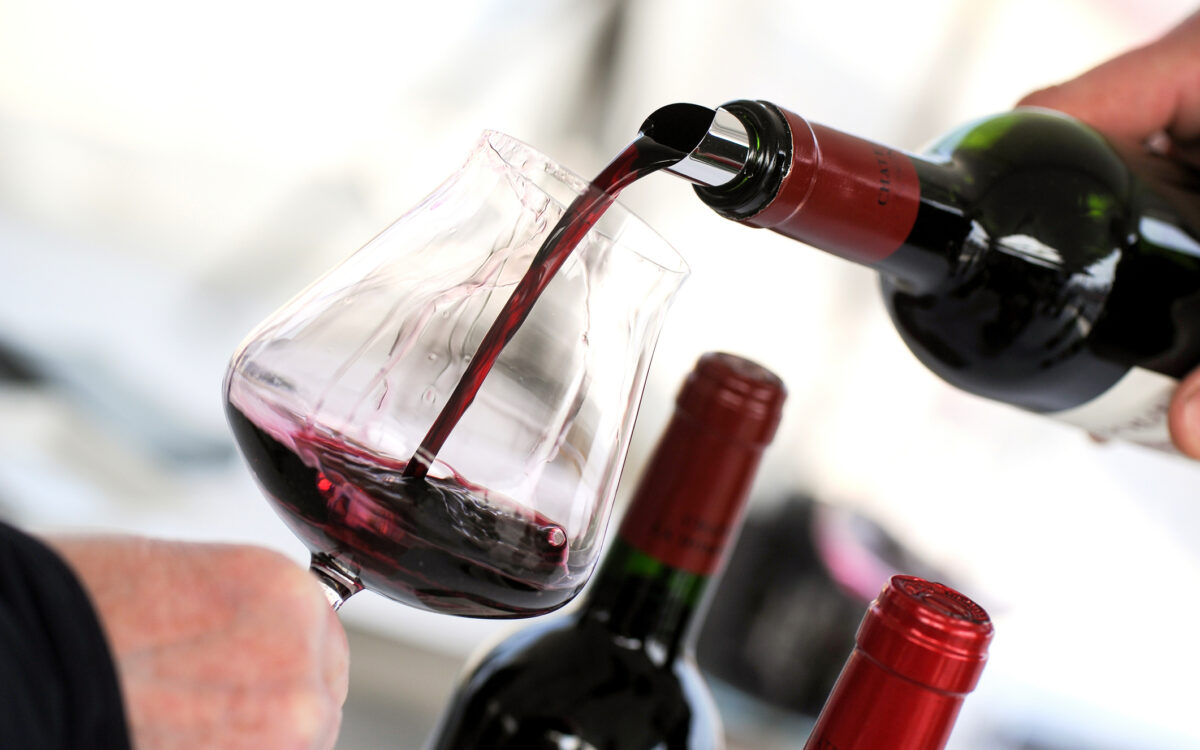
Opening a bottle of Barolo is a special moment, but it may not be finished on a single occasion. In these cases, it is essential to know how to store it correctly after opening, to prevent the wine from losing its aromatic profile or, worse, oxidizing within a few hours.
Once uncorked, Barolo comes into contact with oxygen. This triggers an evolution process that, on the one hand, can initially enhance aromas, but on the other hand, over time, can turn into oxidation. To slow this process, the first precaution is to reseal the bottle immediately with an airtight stopper.
Even better is to use a vacuum pump, a simple but effective tool that removes residual air from the bottle, creating an environment less favorable to oxidation. There are also stoppers with anti-oxygen technology or professional inert-gas preservation systems, particularly suitable for those who often open important wines such as Barolo.
The second key point is temperature: the bottle should be placed in the refrigerator, even if it is a red wine. Cold significantly slows oxidative reactions and helps preserve aromas and structure. Before serving it again, it will be sufficient to let it acclimate for 30 to 60 minutes at room temperature.
Finally, pay attention to timing: an opened Barolo can remain in good condition for 2 to 3 days, at most 5 days if it is well preserved and if the wine was young. For older or more refined bottles, the useful time is significantly reduced.
Handling an already opened bottle with care is a gesture of respect for the wine and for those who produced it. It is also a way to taste it calmly, on more than one occasion, without losing any of its extraordinary intensity.
Barbaresco and Barolo compared
How long Barolo lasts: unopened versus opened
Barolo is a wine designed to last over time. Its complex structure, clearly present acidity, and tannic richness make it one of the longest-lived Italian red wines. However, storage duration can vary significantly based on two main factors: whether the bottle is still unopened or already opened.
Unopened bottle
If stored correctly, a bottle of Barolo can last from 10 to 30 years, and in some cases even more, especially if it comes from particularly outstanding vintages.
Longevity depends on the vintage, the producer, and the storage conditions: the younger the wine is, the more time it can evolve in the bottle.
For Barolo Riserva labels, which have already undergone long aging in the cellar, storage can extend beyond 30 years, provided that the wine is kept in an ideal environment.
Opened bottle
After opening, the time available is drastically reduced. Even with all the appropriate precautions, oxygen starts an irreversible degradation process.
As seen above, a young Barolo can maintain good quality for 2 to 3 days, at most 5 days, if stored in the refrigerator and under vacuum.
An aged Barolo, instead, is more fragile: often already partially oxidized due to long maturation, it should be finished within 24 to 48 hours.
Knowing these differences is essential to enjoying Barolo at its best, without risking compromising its elegance. Every bottle is unique and deserves attention: understanding when to drink it is an integral part of the pleasure of tasting it.
Common mistakes to avoid when storing Barolo
Storing a bottle of Barolo does not require sophisticated equipment, but it does require attention. Even a noble wine like this can be compromised by distractions or incorrect habits. Here are the most common mistakes to avoid if you want to protect the value of your bottle.
Exposure to light: One of the most serious mistakes is leaving the bottle in a place exposed to direct sunlight or halogen lamps. Light alters the aromatic structure of the wine, accelerating aging in an unbalanced way.
Temperature fluctuations: Placing Barolo in environments subject to strong temperature variations (such as near ovens, radiators, or windows) can cause the cork to expand and lead to premature oxidation. Temperature must remain stable between 10°C and 15°C.
Environments that are too dry or too humid: Ideal humidity is around 70 percent. Lower values dry out the cork; higher values promote the formation of mold. It is therefore a common mistake to store bottles in attics, kitchens, or bathrooms.
Storing the bottle upright for long periods: If the bottle is sealed with a cork, it must be kept horizontally, so that the wine keeps the cork moist and airtight. Upright storage can dry out the cork, with the risk of air infiltration.
Neglecting ventilation: A closed, humid area without air exchange can promote the formation of odors that penetrate materials (such as cork), compromising the wine’s profile.
Opening the bottle too early or too late: Storing well is important, but choosing the right moment to uncork it is also important. A Barolo that is too young can be closed and tannic; a Barolo that is too old can be declining.
Avoiding these mistakes is within everyone’s reach, but it makes a major difference. When it comes to Barolo, every detail can enhance or ruin the experience. It is better to leave nothing to chance.
Conclusion
Properly storing a bottle of Barolo is a gesture that goes beyond technique: it is an act of respect for the wine, the land, and those who produced it. Every bottle contains years of work, patience, and care, and it deserves the same level of attention once it is brought home.
We have seen how stable temperatures, controlled humidity, darkness, and horizontal positioning are essential elements to guarantee longevity and harmonious evolution. However, it is just as important to know how to manage an already opened bottle, avoiding oxidation and extending its life as much as possible.
Barolo is not a wine to be drunk distractedly. It is a narrative in a bottle, a journey through time and territory. Storing it correctly means preparing to live that experience fully, at the most suitable moment, and in the best conditions.
Knowing how to wait, knowing how to choose, knowing how to store: this is also how you recognize those who truly love wine.


 Campagna finanziata ai sensi del reg. UE n. 1308/2013